


Every ingredient that enters your facility carries a history of decisions made by people you may never meet. When those decisions are backed by clear standards and transparent data, trust is instilled, and your food safety culture thrives; when they are hidden behind manual spreadsheets and expired certifications, your culture is at risk.
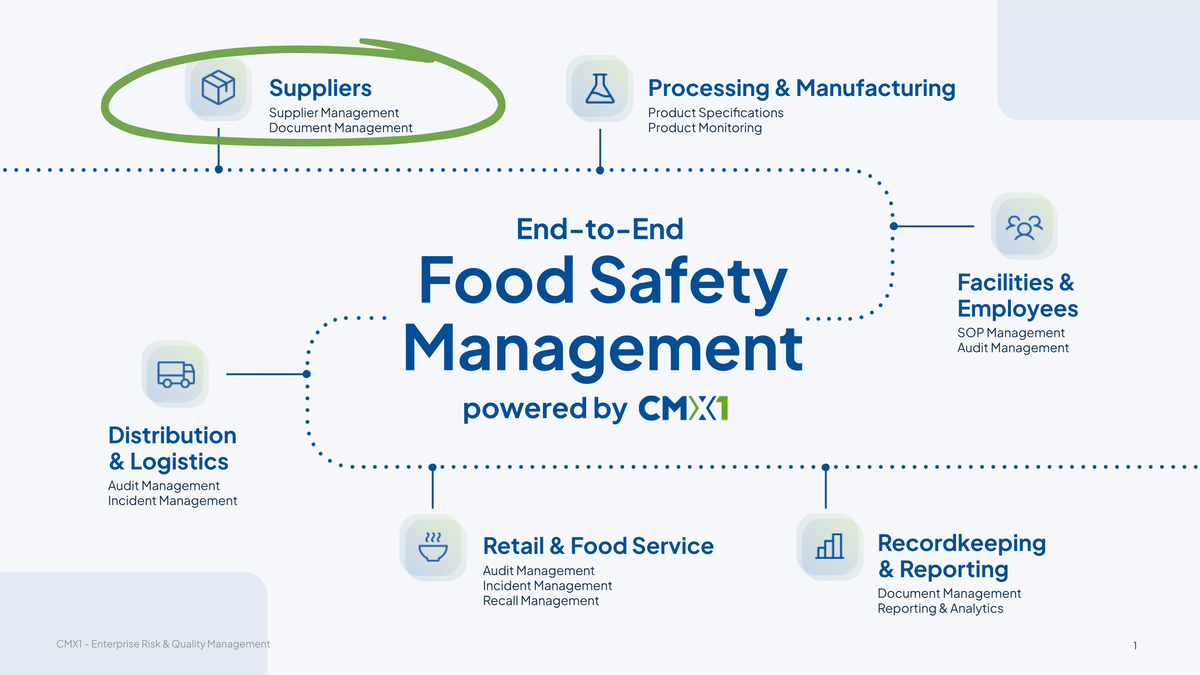
In this first installment of our Food Safety Culture Series, we dive into the often-overlooked foundation of the supply chain: your suppliers. By exploring the critical link between supplier management and operational risk, we highlight how establishing a culture of accountability with your partners is the first step in protecting your brand and your guests.
Food safety culture begins with your suppliers
Food safety culture is shaped by everyday decisions. Who gets approved. How documentation is reviewed. Whether teams trust the information in front of them or work around it to keep things moving.
When supplier expectations are unclear or poorly managed, risk moves downstream. By the time it shows up in a kitchen, a dining room, or a guest complaint, options are limited. Teams are forced to react instead of respond.
Suppliers influence food safety from the start. Ingredients. Packaging. Storage conditions. Handling practices. Records that show standards were met. If something breaks here, everything that follows carries more risk.
That is why the supplier stage deserves closer attention.
What supplier risk looks like in restaurants
In restaurant operations, supplier risk often comes down to speed. New locations open. Menus change. Seasonal demand spikes. Local sourcing fills gaps when national distributors cannot.
Picture a regional restaurant group adding a local produce supplier to keep up during peak season. The supplier is approved quickly. Certifications arrive by email. Someone saves them to a shared drive. Expiration dates are tracked manually.
At first, it works. Until a document expires without notice. Or a manager assumes approval still stands. Or a health inspector asks for records during a busy service, and no one knows which version is current.
The problem isn’t effort. It’s a lack of visibility and automation. When supplier information lives across inboxes, spreadsheets, and folders, teams lose confidence in the data. That is when shortcuts start to feel necessary, even when they add risk.
This is often the moment when food safety culture gets tested.
What supplier risk looks like in hospitality
Hospitality faces a different set of pressures, but the risk pattern is familiar. Hotels and resorts manage food service alongside amenities, housekeeping, and guest services. Many properties operate independently while following brand standards.
Now think about a hotel group with multiple locations. One property sticks closely to an approved vendor list. Another relies on local sourcing to meet guest expectations. Both approaches make sense.
Without a shared system, though, it becomes hard to answer basic questions. Are suppliers meeting the same safety requirements across properties? Were approvals current at the time of service? Is documentation easy to access when corporate or regulators ask?
When issues come up, teams scramble to piece together answers. That scramble is a signal. It means supplier risk was not visible when it needed to be.
Why structured supplier management is essential
Supplier management breaks down when it relies on memory, inboxes, and one-off follow up. Structure is what turns expectations into habits and habits into culture. CMX1’s supplier management capabilities are designed to support that structure without adding complexity.
Structured supplier management works because it addresses the most common breakdowns teams face in day-to-day operations.
Reducing errors from manual processes
Manual supplier processes create quiet risk. Documents arrive by email. Files get saved in the wrong place. Expiration dates live in spreadsheets that only one person owns.
CMX1 reduces this risk by standardizing how supplier information is collected and managed. Requirements are defined once and applied consistently. The system tracks what is complete, what is missing, and what is close to expiring without relying on someone to remember.
This helps teams avoid errors that happen not because people are careless, but because the process leaves too much room for gaps.
Aligning your team with your suppliers
Suppliers want clarity as much as internal teams do. When requirements are inconsistent or unclear, back and forth increases and trust drops.
CMX1 creates a shared understanding between teams and suppliers. Expectations are clear from the start. Suppliers know what documents to submit and when. Internal teams know what to review and approve.
That alignment reduces friction. It shifts relationships away from chasing paperwork and toward maintaining shared standards.
Keeping track of supplier status and performance
Knowing whether a supplier is approved is not enough. Teams need visibility into current compliance, documentation status, and emerging risk.
With CMX1, teams can see supplier status in one place. They can identify gaps early and take action before issues surface during audits or inspections. Over time, this visibility supports better decisions about supplier relationships and risk exposure.
Automated document compliance to strengthen supplier relationships
Documents are the proof behind supplier programs. Without automation, they are also one of the biggest sources of friction. CMX1’s document compliance capabilities help teams manage this work consistently and with less effort.
Automation matters most where manual document work creates friction, risk, and unnecessary follow-up.
Removing the burden of tracking and follow-up
Tracking document expiration dates by hand does not scale. It leads to missed renewals, rushed requests, and unnecessary stress.
CMX1 automates document tracking and reminders, ensuring follow-up is consistent. The system monitors expiration dates, flags gaps, and prompts action before compliance slips. Teams spend less time managing reminders and more time reviewing what matters.
Keeping records accurate and current
Documents lose value when teams are unsure which version is correct. Old files linger. Updated records get buried.
CMX1 maintains version control and ties documents directly to suppliers and requirements. Teams always know which records are current and which ones need attention. That clarity builds confidence, especially when information is needed quickly.
Supporting audits and inspections with confidence
When records are organized and accessible, audits change tone. Teams stop scrambling and start responding with clarity.
CMX1 makes supplier documents searchable and reportable within the same system used for compliance and oversight. Proof is easy to access. Requests are predictable. This consistency supports stronger supplier relationships and steadier food safety operations.
Set the safety foundation for what comes next
Supplier risk doesn’t stay contained. It affects operations, brand trust, and consumer safety. If the foundation is weak, every downstream step carries more pressure. By shifting from reactive manual tracking to proactive supplier visibility, you stop risk at the source before it ever reaches your facilities.
If you want a deeper look at how to build a resilient supply chain, our Food Safety Field Guide is a good place to start. It provides the roadmap for this series and a clear view of how food safety culture shows up across every link of the supply chain.
In our next post, we’ll explore how processing and manufacturing serve as key parts of your food safety culture—and how real-time visibility into SOPs prevents risk from becoming a finished product.