


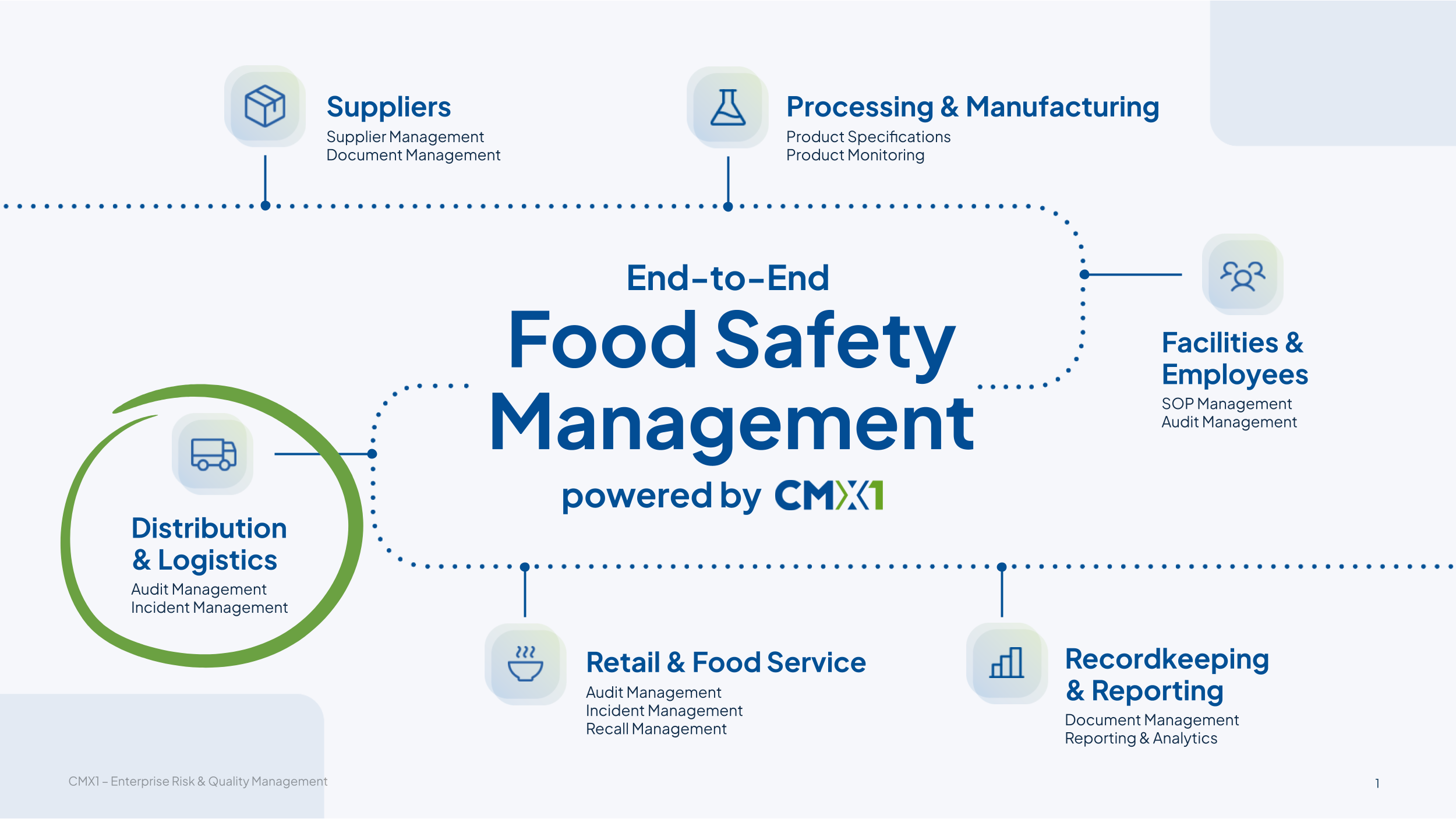
Food safety culture travels with every shipment, shaped by the conditions, decisions, and handoffs that happen along the way. Distribution and logistics introduce constant movement and variability—making consistency harder to maintain and increasing the importance of real-time visibility and coordination.
This post is the fourth installment in our Food Safety Culture Guide series. So far, we’ve explored supplier accountability, production processes, and the role of facilities and employees. Now, we turn to what happens in between: when products are in motion, changing hands, and exposed to new variables.
In distribution, food safety depends on visibility, coordination, and speed. When teams can monitor conditions, respond to issues in real time, and maintain clear accountability across partners, food safety culture remains intact—even in the most dynamic environments.
Distribution: Maintaining control in motion
Distribution introduces complexity. Products move through multiple environments, handled by different teams, often across long distances. Without real-time visibility, risks like temperature excursions, delays, or handling errors can go unnoticed until it’s too late.
Many organizations rely on a mix of carrier logs, manual checks, and disconnected tracking systems. While these tools capture data, they often lack the immediacy and integration needed to prevent issues in transit.
A connected, digital approach changes that. By integrating temperature monitoring, shipment tracking, and compliance workflows into a unified system, organizations can maintain oversight from departure to delivery. Alerts can be triggered the moment conditions fall outside acceptable thresholds, enabling teams to act before product quality or safety is compromised.
Let’s take a look at how this plays out in real-world scenarios:
Restaurant use case
A multi-unit restaurant brand relies on daily deliveries of fresh ingredients. During transit, a refrigerated truck begins to drift out of acceptable temperature ranges. Instead of discovering the issue upon delivery, an integrated monitoring system triggers an alert in real time. The distribution team contacts the driver, reroutes the shipment, and prevents compromised product from reaching the restaurant—thereby avoiding waste, risk, and service disruption.
Food manufacturing use case
A food manufacturer ships finished goods to regional distribution centers nationwide. Using an automated compliance management solution, logistics teams can monitor shipment conditions, verify chain-of-custody documentation, and track delivery timelines on a single platform. When a delay occurs due to weather, the system flags impacted shipments and initiates a review workflow—ensuring product integrity is verified before it enters the next stage of distribution.

Logistics teams: Enabling fast, informed decisions
In distribution, timing is everything. Delays, missed checks, or unclear responsibilities can quickly introduce risk. That’s why empowered logistics teams are essential to maintaining food safety culture in transit.
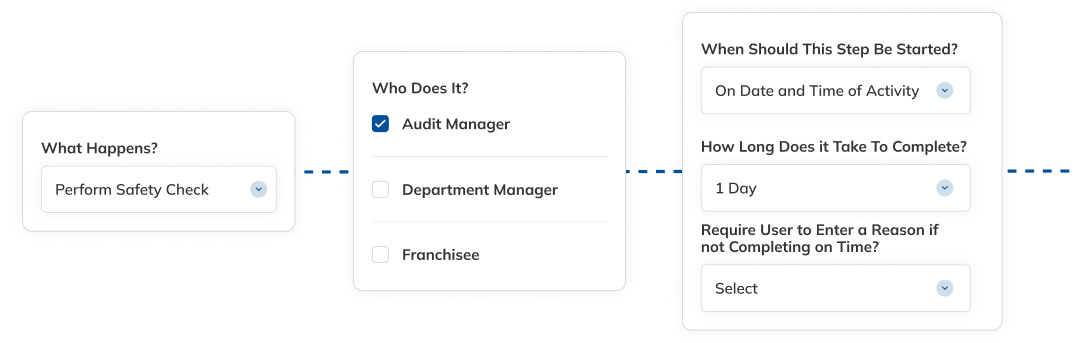
These teams need more than static reports—they need real-time insights and clear workflows. Digital tools help by centralizing shipment data, automating compliance checks, and providing mobile access to critical information. Drivers, warehouse staff, and logistics managers all operate from the same source of truth, reducing miscommunication and improving response times.
Just as importantly, these systems create accountability. Every check, alert, and corrective action is logged and traceable, reinforcing consistent behavior across teams and partners.
Here’s how that looks in practice:
Restaurant use case
At a regional distribution hub, incoming shipments are verified against temperature and handling requirements before being accepted. Using mobile workflows, staff can quickly confirm compliance, flag discrepancies, and initiate corrective actions on the spot. Managers gain immediate visibility into issues, ensuring that only safe products move forward into the supply chain.
Hospitality use case
A hotel group relies on third-party distributors to supply food and beverage inventory across multiple properties. With an integrated compliance management program, hospitality teams can extend their food safety standards beyond their own kitchens—ensuring vendors and delivery partners meet the same expectations for temperature control, handling, and timing. As shipments arrive, staff verify conditions through mobile workflows, while corporate teams gain visibility into vendor performance across locations. Over time, this data helps identify trends, address recurring issues, and strengthen accountability across the distribution network.
Bringing distribution, logistics, and food safety culture together
Distribution and logistics shape how food safety performs under real-world conditions. The pace, complexity, and coordination required to move products efficiently also introduce moments where risk can emerge and escalate.
Delays, temperature fluctuations, and missed checks all influence product integrity in ways that aren’t always immediately visible. Organizations that consistently manage these variables treat distribution as an extension of their food safety system—embedding standards, monitoring conditions in real time, and reinforcing accountability at every step of the process.
When teams have end-to-end visibility—from suppliers to facilities to delivery—food safety becomes a continuous thread rather than a series of checkpoints. This transparency allows organizations to detect risks earlier, respond faster, and continuously improve their processes.
Technology plays a key role in enabling this connection. Platforms like CMX1 unify distribution data, automate compliance workflows, and provide real-time insight into supply chain performance. By bringing together logistics, quality, and operations teams, organizations can maintain control even as products move through complex networks.
Ultimately, food safety culture in distribution comes down to consistency under pressure. When visibility is clear, responsibilities are defined, and teams are empowered to act, safe outcomes become the norm—not the exception.
As products move, so must your food safety culture—adapting, responding, and holding strong across every mile.
To learn more about how CMX1 helps organizations extend food safety culture across the supply chain, explore the full Food Safety Culture Guide.